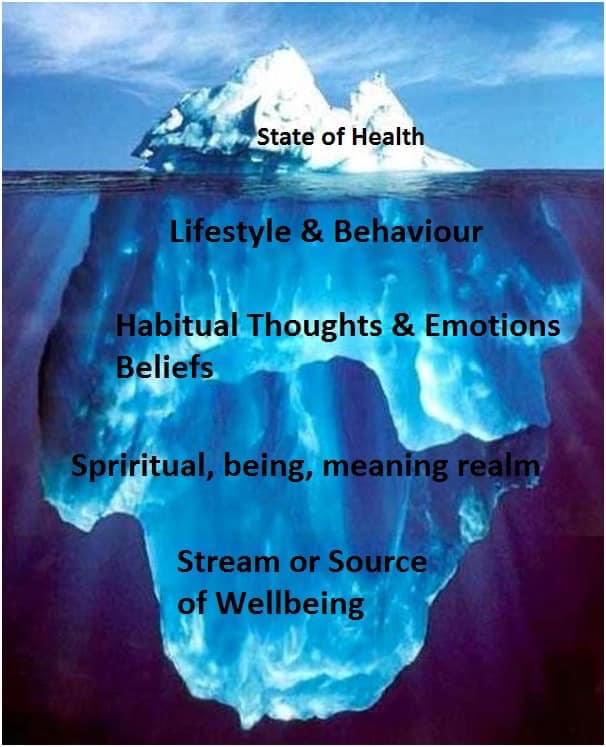
I will talk about mother’s in a moment, but first a confession on how I got to this musing. Years back I learned the term Shekinah, also spelled Shechina, or Schechina, referring to the presence of God in the world according to Jewish theology. I continue to hear the term from time to time and hadn’t understood it in any particular way, until recently. I came across an interesting explanation as it relates to modern day psychological growth and an impediment to growth as well. The former psychotherapist in me always defaulted to the idea that much of the trauma and the resulting cause of a person’s adolescent and adult neurosis was due to their the relationship with their mothers. Don’t worry, we are all a little anxious. Before you shut me down, or TL;DR, give me a chance.
We are all emotionally feeling creatures who make continual hypothetical calculations based upon an internal schema of qualitatively coded meanings based in experiences from early attachment, friendship, culture, religion, our interpretations of life from novels, television, movies, social media, and more—from all, we take with us the good, the bad, and the ugly. Our biases may be accurate, or outdated, or quite frankly, even evil.
Our first culture, our family can be seen as tests, trials and could have been challenging experiences where we ultimately internalized an image of ourselves. We were shaped and molded into what we were going to believe about ourselves in the future. In our families, for better and for worse, we learned our attachment styles, love languages, conflict reflexes, and the quirky little ways that we do and think about nearly everything. During the critical years of attachment, we unknowingly worked to consolidate our disposition and worldview – the way the world is, rather, the way we think the world should be. We learned through a process of emotional conditioning how to react to stress, how to feel, think, and be. After all, we are feeling creatures, and even our thoughts are inextricably tied to our emotions.
One way or another, as my emotions about you interact with your emotions about me, the reality of us takes on something entirely new.
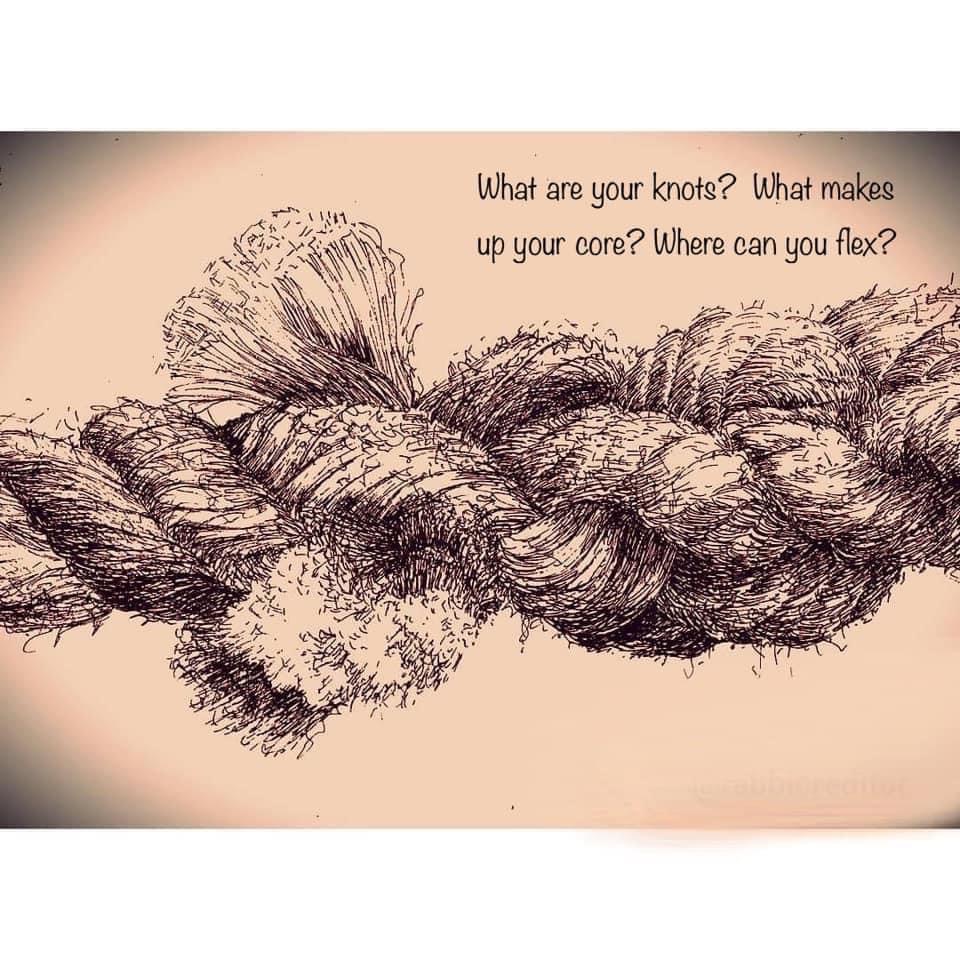
Our past experiences intermingled with our own unique personalities continue to twist us into knots. They also make-up the core of who we are, influencing our thoughts, emotions, and behavior. We also have the ability to flex. Sometimes almost hypnotic, self-fulfilling behaviors and interpersonal habits can have the power to paralyze our capacities for reflection and emotional responsiveness. As we venture further out from family to culture to society, this interplay of increasingly complex systems of emotion, perception, thinking, and meaning become second nature to us. People can become stuck in their own rigidity—prejudiced or presumed ideas are supported by a social system which conversely supports the ideas because the social system itself which is filled with people with their own presumed or prejudiced ideas. The proverbial “chicken or the egg” really cannot do justice at this level of complexity.
And, yet, motherhood is the place where it all begins.
Why introduce this idea of mothers and how does it relate to what I am musing about “out loud.” Confession time: I am not convinced that mothers are the cause of a person’s neurosis, or even if correlations can be made. The proverbial chicken and the egg, right! And, this is what I do believe, and I am being repetitive for a reason.
The relationship with a person’s mother early in life was up to chance. Relationships with one’s mother in infancy was out of our control, while relationships with one siblings, if we had them, as well as our friendships are mostly under our control, or reciprocity, at least to the extent that we can develop interpersonally. Using that simple understanding of choice, the idea of intentionality holds weight into how to deal with many of life’s complexities.
It is not uncommon, starting at the earliest of ages to treat our mothers as emotional ATMs (automatic teller machines) for love, care, attention and approval, and perhaps that is the cause of a person’s neurotic tendencies. If our mothers are living, or in some instances where they are not – every time a person calls, or has dealings with them, or thinks about them, it turns into an interview or emotional consideration of themself regarding the things that are going on in their lives. If there were one piece of advice I would suggest to people experiencing difficulties, it would be to stop treating their mothers like an emotional ATM for caring, love, affection and/or approval.
Well, why not? Isn’t that what mothers are supposed to provide?
The fact is we all got our start of “being human” from the womb onward. Based on the previous discussion, our early history could uplift us, or weigh us down, perhaps making us sad, fatalistic, or harmed in some way and that could cause or correlate with real anguish down the line, including what has commonly been referred to as depression. If your mother had the opposite effect and uplifted you, was that a choice that you made? Many mental health professionals believe, based on case studies and clinical experience, that babies can and do become depressed. There is a perception that early childhood is supposed to be a happy and carefree time but, in many ways, childhood can be overwhelming and scary. Children need their mothers.
The conversation eventually turns to “Alright, no thinking about mom negatively?’ She was what she was. Answer: yes. “So, describe to me, what does this have to do with the Shekinah, explained as being the presence of God? Well, this is me musing, writing some of my thoughts, following some dots, and potential knots that may be keeping a person bound up in emotional turmoil. See if it resonates with you.
Whether one is fan of the Shekinah, which the mystic sages see as the archetypal image of the Mother, or not, it matters little how much or how little a person was loved by their biological mothers. No chicken, no egg. No cause, no correlation. That seems to go against the idea of how important our mothers were in one’s life.
There are other causes or correlates for depression besides the love a person received or did not receive as a child. Brain chemistry, environmental factors, genetics, and not to go against well-qualified experts – the mental health of caregivers, not necessarily a person’s mother. The point is that having a healthy self often requires one to intentionally heal they self. Can mother’s heal you? Well, birth mothers, maybe not. How about the archetypical mother, one who is considered to be the perfect example of a particular kind of person because they have all the most important characteristics.
Now we are talking my language. No one is perfect. Therefore, my interest in healing rituals. Those that can help a person further develop the confidence and courage to support themselves and/or others through difficult times along life’s journey. Being one’s mother, even men (who are nurturers) being able to show unconditional love to oneself, and/or being able to show unconditional love and affection towards others, is critically important in all types of relationships.
Switching from the human to the spiritual is something a person has control over. Doing, or simply being, is an intentional act. Thinking of the Shekinah as a motherly metaphor for what sustains a person spiritually with unconditional love is an intentional act.
Perhaps reflecting on one’s own unique journey, which for me includes a ritual of reflecting and writing about about the sefirot during this particular Omer period, for example gives me pause. The what, the seifrot? The Omer? For now, let’s just consider seifrot as attributes of the divine. One doesn’t have to be a mystical to gain benefit. Becoming aware of one’s spiritual thoughts and feelings are not God. They are only reflections of God.
Some questions for reflection: Who held you with unconditional love? How have they helped you understand that you are more than your fears? If you believe in a higher spiritual being, how did you come to be aware? Perhaps it was your mother. How do you plan to thank her on this Mother’s Day?
If you are a fan, is there still a reason to count—or want to count—the Omer? And, if you are not a believer, might there still be a psychological benefit to consider healing rituals. Absolutely!
I will talk more about the Counting of the Omer another time and other types of healing rituals, as well. Consider, now that you are a bit familiar with what it is, what is at stake in reconnecting with Shekinah, the archetypical mother. The rationale of the “metaphorical mother” appears to be within control of the individual. Is the Shekinah the ideal mother we never had? Maybe a person would like to heal a relationship with their own mother? Or with the “mother” inside of themself, so they can care for others more freely. Maybe a person would like to help society improve its treatment of mothers so that fewer parents and children suffer.
May you be fortunate enough, lucky enough, blessed, or however one might see it, to find a healing ritual that allows you to be the best version of you and simultaneously, heal the earth, as well.
Don’t think you need a healing ritual? Okay. Go thank your mom.



Leave a Reply