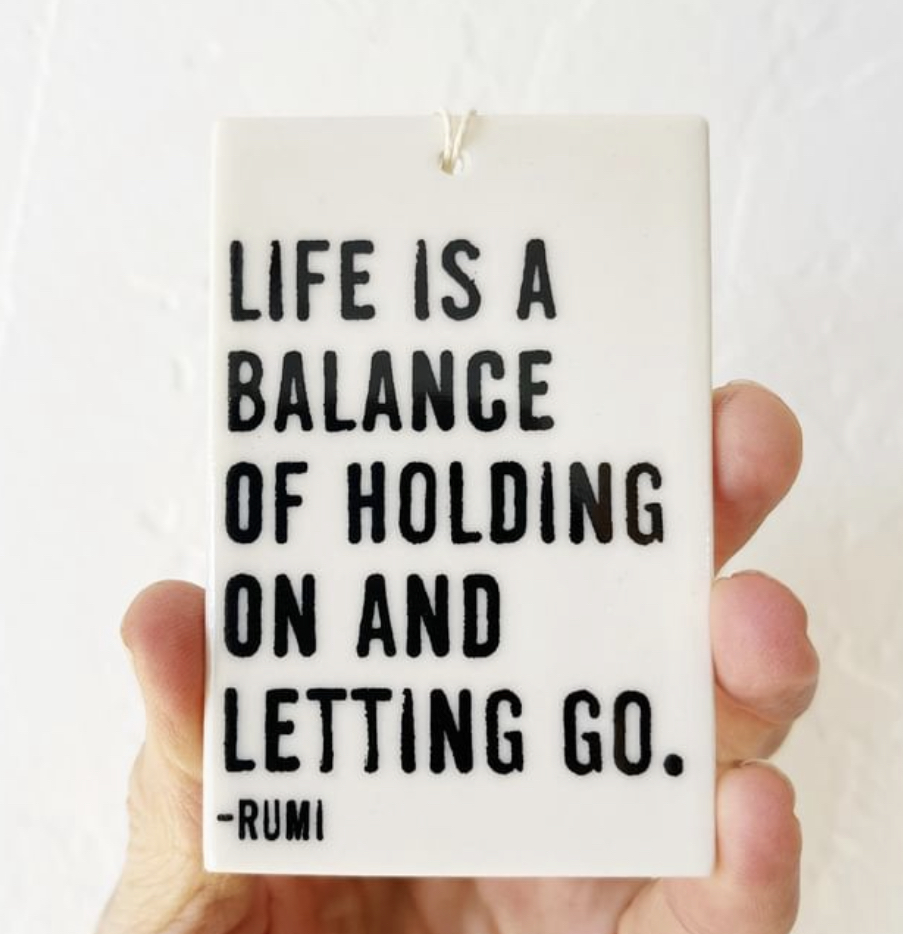
I just finished Arthur Brook’s, From Strength to Strength: Finding Success, Happiness, and Deep Purpose in the Second Half of Life. There is some real useful information from his ideas that help explain a lot about transitions. The two intelligences are inversely correlated and seem to shed some light on another phase of life that can also be bolstered by utilizing the traits of endurance and surrender. My belief anyway. This is also what I have been learning about and teaching for several years. His ideas are not without scrutiny, they are well-documented in the neuroscience literature.
Brooks’ writes that as older people enter the next stage of life – fluid intelligence, or what a person might commonly think of as raw smarts, begins to decline. That’s the bad news. The good news he says for us emergents, and for anyone seeking some relieve and growth, is that there are important capacities that we posses, and we can carry them into the second half of life, crystallized intelligence – the ability to use the knowledge and experiences learned from the past. This type of intelligence increases with age. These ideas are also part of a mantra that I profess, ”life is simple, but not easy” and I believe it applies to the first half of our life, and most prominently, in the second half of our life
So the road to a better, simpler life as some move from the activities most favored by strivers (which overwhelmingly rely on fluid intelligence) to those – like teaching, for instance – leverage the benefits of well-developed crystallized intelligence. For those over 50, the yield curve works to “our” advantage. As fluid intelligence decreases, crystallized intelligence increases. Like the prefrontal cortex coming online in young people’s twenties, consequences become more realized as the idea of adolescence decreases, there are advantages that benefit them. Young people’s parents can benefit from that, too <smile>. With “our” life-clocks-ticking, perhaps unbeknownst to us, this can be a point of resistance. Not that we are getting older, or that there is a path we may not have reached yet, but there are real advantages to the way our brains are designed to work. There is also another idea worth considering, surrendering. I am definitely NOT suggesting or saying I am giving up, rather, I am learning that this idea of surrender may be beneficial and can work to one’s advantage.
Embrace what you know. Be open to what you can learn. Find the middle way.
And, for those whose mission, desire, or perhaps out of necessity it is to strive and to compete, those 18-29 year olds and into midlife, I hear you. I understand those are the doing-years, and it never hurts to have the occasional respite. Even those beginning their journey or are in the middle years can benefit from the balance. I sure wish someone would have told me that when I was younger. Would I have listened? Um, probably not. All I can say is that wisdom of being young comes late and social conditioning can be strong.
I confess, for me and for many people I know, especially emergents starting around 50, the idea of struggling is one of the most difficult traits to put into practice consistently. Everyone seems to take umbrage with the idea of surrender.
Put succinctly, this idea of surrender means being open to the gifts of a person or situation and what it has to offer. This is not a way a way to reframe a situation when things don’t go our way, but a proactive measure. Surrender means giving way to our agenda and being open.
What I am discovering is that through my own struggles, and the exploration of those struggles, there are these ideas that speak directly to humility and surrender. Surrendering to struggle is also akin to seeking wisdom. In the realm of surrender, we are cordially invited to seek wisdom or advice from others. And, in order to appreciate the opportunities that may exist, humility appears to be a requirement. Humility can help us. As I surrender to a plan that is greater than my original plan, I acknowledge that I am not fully in control. It takes off some of the stress of it all, too. If I profess to know everything and stubbornly refuse to hear or learn from anyone else, I am losing out on what might be an opportunity for growth. I am quickly finding out to surrender, giving way, requires humility to acknowledge that I don’t have all the answers.
Surrender alone is not “the only” answer. Pushing through the obstacles that might get in the way of pursuits of achieving a long-term vision cannot be overlooked either – surrender, on the other hand, appreciates living in the moment and believing in the perfection of things as they are. Call it faith, call it coping, call it healing – it is accepting life on life’s terms.
Achievement and endurance seem to be single focused on their vision and mission. To surrender opens a person to receive what wants to be offered. We need both without sacrificing the importance of surrender.
That’s the challenge. Endurance versus surrender. Can it be endurance and surrender? Consistency and practicality certainly influence the ability to implement and balance these two ideas.
As a wanna-be, a striver, my instinct in the first two-thirds, or the first half of my life was much different than it is today. I was competing for everything. I confess, being the son of a man who had tremendous ambition and drive, a person who measured success in dollars, and giving to community was a moral imperative — my achievement instinct is strong. Pushing through is what I know. My journey is coming to understand that. It’s how I — and many of us — seem to be conditioned. For some it is in their blood. After all, we live in a country that actively encourages striving, driving towards goals, and achieving them.
Surrender asks something that feels foreign. I am learning to surrender – to allow things to unfold and emerge. When I talk about surrender, I hear: “are you kidding? Be passive! I’ll fall behind. I will never achieve that way.” No that is not what I am saying. What I am talking about for some may be faith. Although, whenever I use that word it becomes another point of contention or resistance as well. You mean I am suppose to trust in something I cannot see? Faith is different from trust. Trust is earned over time. Faith is given freely without logical rationale. As emergent elders grow and age there appears to be a movement in thought, away from the purely rational to just. The opposite of faith is fear, which is the shadow of surrender. Yeah, I am still wrapping my brain around that one. There seem to be more questions than answers. Right now, I am working on endurance and surrender when it comes to faith among other endeavors in my life.
Maybe life’s great! Awesome. I confess, it isn’t always and it’s going from good to better. I am thankful for all I have. And, is there more? I like the idea of going from good to better. How about you? Do you want to keep on feeling the way you are feeling? if not, do something different, and you will feel something different. That’s a guarantee. How long will it take? Will it be better than what I feel now? Honestly, I don’t know. I just know it will be different. It might take awhile, it that okay? I had to do something different. I am feeling different because I am doing something different. Experiment and see what you come up with, and remember, life is a marathon, not a sprint.
Looking at my own life, I can see that fear has always been present when I am trying to push through something, even in the face of all signs asking me to surrender and give it up. Fear of losing ground was keeping me from resting when my body and my mind were telling me to rest. Thus the introduction of my weekly routine / ritual that I instituted a few years back. I must rest. And, fear of having my beliefs changed or learning something that might shift my perspective kept me from being present to what others had to share, and that did not make sense, so I tried something new. And, I am learning. Surrender asks me to do something extremely challenging — especially in today’s world: it is asking me to appreciate living in the moment and…
“Get up in the morning and look at the world in a way that takes nothing for granted. Everything is phenomenal; everything is incredible; never treat life casually. To be spiritual is to be amazed.”
Abraham Joshua Heschel
Want to read more about radical amazement click on the the hyperlink. Yes, I know it’s not everyone’s belief. You have to admit, it’s not a bad idea, and a cool term. What’s important is that you find what works for you. Even the things that feel horrifying, like war, violence, climate change, election results, and Supreme Court decisions — the big politics, or as I refer to it, a necessary evil, life with emotion, and definitely not always a rational endeavor who are doing politics, there are some things, for one’s own mental health, that need some amount of surrender.
Surrender to what? The inherent negativity bias. A major step is to have faith that everything that is happening is part of a greater plan that we cannot see, least of all what we can control. Perhaps by trying to control things, we get stuck in a rigid mindset of the “right” sequence to do something rather than allowing things to unfold. We make what is happening “wrong.” We resist the moment instead of surrendering to it. If you are a Type-A personality, an obsessive striver, which I am not, this can be a real challenge.
Counter-intuitive as it may seem, appreciating and surrendering may very well be the secret weapon to sustaining endurance. I believe embracing this mindset (what I refer to as one’s worldview) and heart-set (all the human emotions that go with it), can empower a person to focus on their mission. The desire to control or have things be a certain way is the opposite of humility and surrender.
So, how does a person endure in humility, even when things don’t go the way they would like to see them? It seems when we can endure in our humility, it paves the way to let the good happen, which in turn deepens the faith in the unfolding of events.
What I am learning, in releasing resistance to what is, I free up energy to sustain my endurance to continue striving toward my mission and vision. Rather than focusing on extrinsic rewards, I can focus on intrinsic rewards too.
Not everyone has that drive, or be in that headspace right now, and I am speaking to those who do, as well as those who do not. Life is a spiral. It comes back around. It’s not linear. We all, hopefully, get older. As research in the neurosciences has revealed, young emergent’s prefrontal cortex comes online in their late twenties. It isn’t a matter of if, it’s when. Will we all evolve? Do we all seek growth? I cannot answer that and I have lots of questions. Personally, I find myself occasionally reverting back to the old ways: doubting myself, not having it all together, dropping balls, and as my wife likes to call it – being half-done man. Progress, not perfection, right?
 Confessions of a Cowtown Culturalist
Leave a comment