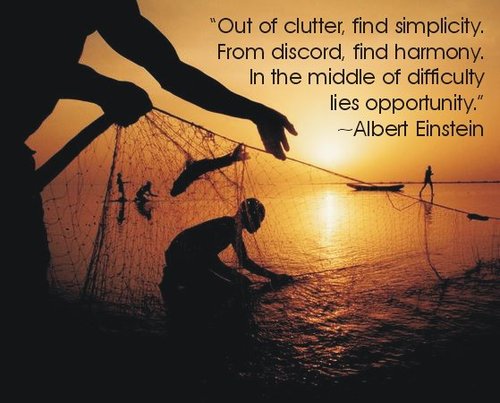
I have a confession. As the cliche goes – while it’s true that we are not all in the same boat, we are all in the same storm. Thinking out loud is a goal these days and writing has become my medium of choice. Being in the middle of life and exploring the journey is one of my obsessions. I recognize there are lots of middles for others, and they are not the same, whether it is age, or relationships, or careers, or another middle I haven’t considered. Where does one turn?
Faith is helpful. Not necessarily one specific kind of faith, just faith in something that is allows one a grounding. Studying the intersection of psychology and Torah is fascinating to me and sharing is fun. If others find the same with the Bible or a higher power, it seems the journey can be simpler – as in simple, not easy.
So, I am having these thoughts and today we begin a new book of Torah, the one in the very middle. I have always had difficulty with the book of Leviticus. I have found that lack of understanding doesn’t have to mean quitting. There is a choice. Being that there is usually middle ground, I decided that may be a clue. Let’s see what other people have to say. Apparently there is a lot to be said about being in the middle.
Near the middle of Leviticus there is the verse “Love your neighbor as yourself; I am Adonai” (Leviticus 19:18).
Martin Buber, the Israeli philosopher best known for his philosophy of existentialism, which centered on the distinction between the I–Thou vs. the I–It relationship, said the last words of this verse: “I am Adonai” can be interpreted to mean “You think that I am far away from you, but in your love for your neighbor you will find Me; not in his love for you but in your love for him – he who loves brings God and the world together.”
Buber further explained that it is the individual that must begin. Existence will remain meaningless if a person does not step into it without active love. Is Buber saying, if a person does not do it in this way, they will not discover its meaning for themself? He believes that everything is waiting to be hallowed (become holy); it is waiting to be disclosed and to be realized by the individual. For the sake of this, it is one’s beginning, that is why God created the world. Hmm, that is a lofty explanation.
But, but, but, it seems a far cry from dismembering animals and burning them on the altar. But for Torah, according to Rabbi Barenblat, there is no lack of consistency between bringing a calf to the Temple to make up for having committed a wrong, and this lofty injunction to love each other and to be holy like God. The Rabbi says a person’s deepest values are not separate from the messiness of everyday living: they are expressed in and through that messiness.
The holiness of the middle may be hidden, disguised beneath logistics and details. In the book of Leviticus, those details are sacrificial, calves and turtledoves and grain offerings going up in the smoke. Perhaps Leviticus comes to teach that there is holiness, and there is love, even in the middle of things.
Maybe especially in the middle of things.
Is nature showing us the way? Consider the spring vernal equinox due to arrive on March 20: another kind of middle, a mid-point. Winter hasn’t quite let go, and warmth hasn’t quite begun; we’re balanced, like the planet, between one season and the next. Is the darkness of winter a perfect time to look back – after all, winter is ending. Cherishing winter? Is it possible to recognize its sweetness and let go of its bitterness, and get ready for coming spring? Could it be a time to prepare for whatever comes next?
Thank you Rabbi B, Martin Buber, and Leviticus for an interesting take on the rhythms of life. Perhaps as this new book of Torah begins, maybe there can be a little more understanding of what the phrase “one moment at a time” means. The middle can hold that wonder if one chooses to seek it out.
 Confessions of a Cowtown Culturalist
Leave a comment